
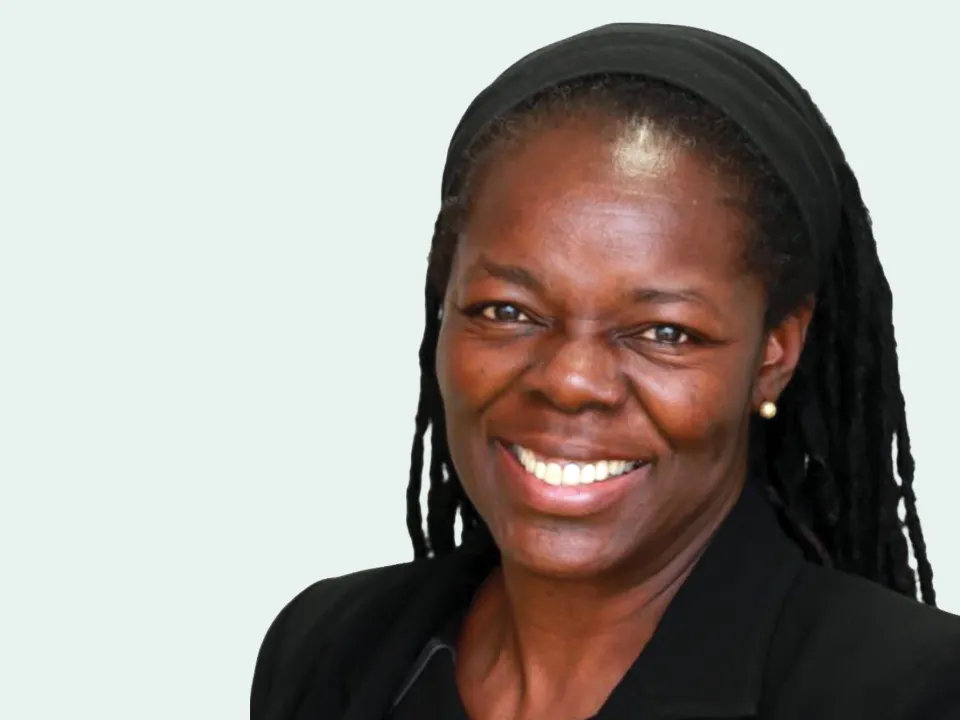

Ann Graham
ADCS President
Corporate Director of Children's Services, Haringey London Borough Council
This week I have been pondering the question… ‘how much more evidence do we need to secure change?’ For many years, we in children’s services, colleagues in schools and colleges, health services, parents and carers plus children and young people themselves have been raising concerns about mental health challenges. ADCS has continually flagged our concerns with central government too.
In our daily work, we see a growing number of children and young people experiencing growing levels of distress and the real-life impact of the lack of swift access to support and treatment. This distress is also experienced by families who see their children struggling but can’t secure access to the support they need.
At the start of this week, Professor Peter Fonagy, who has led a review on mental health, autism and ADHD for the government, made a bold and welcome statement, that the deterioration of children’s mental health is not overstated. He pointed to a constant rise in mental distress since the 1990s, with around one in four 16 to 24-year-olds now struggling - a number that is far too high and only going up. However, his final report has not been published as expected.
Those of us working with children know this to be true without reading another report, we see it every day in our schools, communities and services. For too long, waiting lists to access support have been too long! It is clear that this is a life course issue; poor mental health in childhood shapes life chances well into adulthood, and we know around half of all mental illness in adulthood begins in childhood.
Others see this too. Lord Darzi’s Independent investigation of the NHS and the IPPRs Health and Prosperity Commission, which both reported in 2024, noted big challenges here. More recently, stark messages included in the interim report from Alan Milburn’s Review of young people and work, all add to this picture. With one in eight young people now not in employment, education, or training (NEET), Milburn found that health needs, and mental health needs in particular, are “a primary driver” for those who are NEET and remain NEET. This is described as a “standout change.”
Milburn also found that schools have become the frontline of a youth mental health crisis. It is always great to see year 7’s starting secondary school and this is an exciting time for so many, new uniforms, opportunities to make new friends and much more. However, we know that some will struggle with this transition, and they will show or tell us, in different ways, that they need help.
So, though we know that funding is not the only issue, wouldn’t it be great if children’s mental health services received a considerably higher share of health funding (from a low base) and resources? This would give us the opportunity to fill the ongoing gap between the mental health support teams in schools at one end and specialist services at the other. I can’t think of anyone who doesn’t want to provide support with good outcomes from an early age so that, hopefully, we have fewer children and adolescents experiencing poor mental health into adulthood.
Children shouldn’t need to meet a mental health clinical threshold to access support so prevention and early intervention must also be a top priority in what follows from the Fonagy review, alongside a whole system and all age and stage approach to mental health. That means acting on the root causes of distress, not just picking up the pieces when children reach crisis point.
Rewiring the State, the Cabinet Statement from the new Prime Minister’s government on devolution, may offer new opportunities to think about how we respond to these challenges in a different way, and how we ensure children’s needs are at the forefront of decisions taken across place. I hope the government is also considering how it can secure a more collaborative approach across departments, as it’s clear that the solutions to the mental health crisis, and so many other social challenges, are cross cutting and multi-dimensional.